Mistakes Canadians make with U.S. taxes

Tax requirements in the United States are quite different than those of other countries around the world. This article will outline some of the common mistakes Canadians make when it comes to U.S. taxes. Do you recognize yourself in any of these scenarios …?
Not filing a U.S. tax return when required
The United States is one of the few countries in the world that imposes taxes on citizenship as well as residency and source of income. Other countries typically tax based only on residency and source of income.
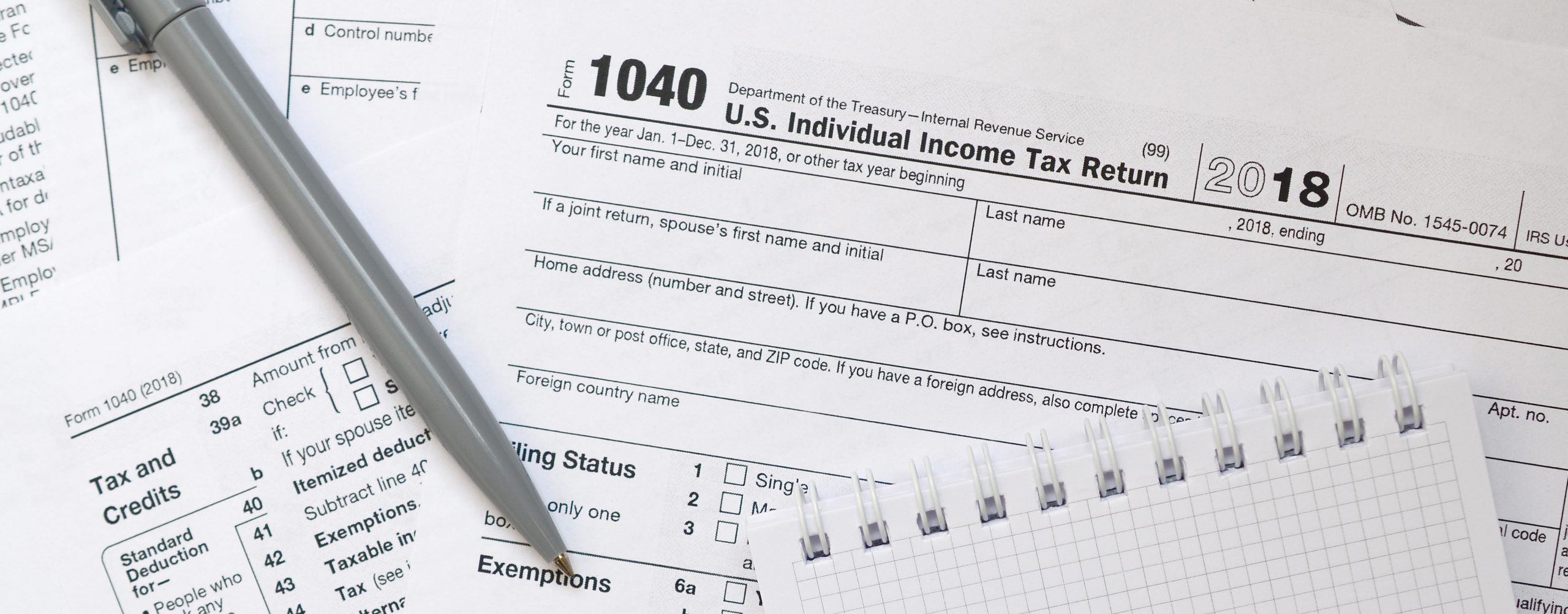
If someone is a U.S. citizen or a U.S. green card holder (also known as a U.S. lawful permanent resident), they are required to file a U.S. resident return (Form 1040), even if they are living outside of the U.S. Their worldwide income is reported on Form 1040, and the use of mechanisms such as the foreign earned income exclusion or foreign tax credits will reduce or eliminate double taxation on the income reported in both countries.
Being physically present in the United States can also trigger a U.S. tax filing requirement. The substantial presence test involves a calculation based on the past three years of physical presence in the United States. Generally, each day in the current year counts as a full day, each day in the first previous year counts as one-third of a day, and each day in the year before that counts as one-sixth of a day. If the calculated number of eligible days is 183 or more, then the individual meets the substantial presence test, is considered a U.S. tax resident and must file a U.S. tax return.
Corporations or partnerships may also have U.S. filing requirements if they earn revenues from U.S. sources. Corporations must still file a Form 1120-F with a Treaty-Based Return Position Disclosure (Form 8833) if they are taking a treaty position that their business profits are only taxed in the country where it is permanently established.
Not filing the correct forms
Individuals meeting the U.S. substantial presence test are considered U.S. tax residents and by default would be required to report their worldwide income on a Form 1040 return. However, you can file as a U.S. non-resident and only be subject to U.S. tax on your U.S.-sourced income. If you meet the substantial presence test and are physically present 183 days or more in the current year alone, you must file a Form 1040NR return with a Form 8833 treaty position in order to be treated as a U.S. non-resident for tax purposes. Alternatively, if you meet the substantial presence test and are physically present less than 183 days in the current year alone, the Closer Connection Exception Statement (Form 8840) may be all that is required, unless you had income from U.S. sources, in which case you should attach the Form 8840 to a Form 1040NR.
It should be noted that the treaty positions do not preclude the individual from other U.S. resident required tax filings such as the Reporting of Foreign Bank and Financial Accounts form (FBAR).
Not only could there be a U.S. federal tax filing to complete, you may also need to complete various state tax filings. Each state has their own rules on individual filers, as well as different registration and reporting requirements for corporations or partnerships doing business in each particular state. Corporations or partnerships may also have U.S. payroll reporting, Form 1099 reporting, or Form 1042-S reporting to complete if they have U.S. employees or contractors.
Unknown exposure to U.S. estate taxes
Even though an individual may not be a U.S. citizen or green card holder or meet the U.S. substantial presence test, they may still have assets south of the border that expose them to U.S. estate tax liabilities. If you fit this description, know that the U.S. federal estate tax employs a graduated rate that can reach as high as 40%. There may also be additional state estate taxes.
An obvious way you may have U.S. estate tax exposure would be if you own U.S. real estate. U.S. taxes will apply to the fair market value of this investment.
A perhaps not-so-obvious area of U.S. estate tax exposure would be if you hold securities or stocks of U.S. companies inside a Canadian brokerage account. Canadian mutual funds that hold shares of U.S. companies would not be classified as “U.S. situs property,” but the direct stocks of those companies would. These investments would be subject to U.S. estate taxes on their fair market value, not just on the gain portion of the investments.
U.S. non-residents can take a treaty position to claim a pro-rated unified credit exemption to gain some relief from U.S. estate taxes. This formula consists of U.S. situs property over worldwide assets multiplied by the unified credit exemption limit ($11,580,000 USD for 2020). To rely on this treaty position, you must arrange to have Forms 706-NA and 8833 filed nine months after the date of death of the estate owner (unless an extension was granted), even if no U.S. estate tax is due. Without this treaty position, you are entitled to a credit of $13,000 USD, which exempts $60,000 USD in value of U.S. situs property from your U.S. estate tax obligation.
You can correct your mistakes
To avoid the large penalties that could be assessed on late or incorrect filings, you can catch up and correct delinquent tax filings without fear of penalties. Voluntary disclosure programs and delinquent filing programs are available through some states and the Internal Revenue Service (IRS). However, you are advised to do so as soon as possible, as it has been mentioned that these programs may not be available in the future.
If you have U.S. estate tax exposure, you can use one or more of these remedies:
- You could liquidate your U.S. situs property or limit the amount you purchase or gain in future.
- Utilize a trust structure to hold the U.S. situs property.
- Secure sufficient life insurance to cover any U.S. estate tax exposure.
Whether you have committed one or more of these common mistakes, forewarned is forearmed when it comes to preventing and correcting them going forward. There may be other U.S. tax implications in your situation not covered here. If you want to be more certain about your situation, talk to a professional who specializes in U.S. taxes.
This article is reprinted from the newsletter BUSINESS MATTERS with the permission of CPA Canada. BUSINESS MATTERS is a bimonthly newsletter prepared by the CPA Canada for the clients of its members.
Disclaimer:
BUSINESS MATTERS deals with a number of complex issues in a concise manner; it is recommended that accounting, legal or other appropriate professional advice should be sought before acting upon any of the information contained therein.
Although every reasonable effort has been made to ensure the accuracy of the information contained in this letter, no individual or organization involved in either the preparation or distribution of this letter accepts any contractual, tortious, or any other form of liability for its contents or for any consequences arising from its use.
Richard Fulcher, CPA, CA – Author; Patricia Adamson, M.A., M.I.St. – CPA Canada Editor.